Moana’s Mission
EGR 121: Engineering Innovation
Objective
Design a new and creative toy that is fun, low-cost, sustainable, and safe for children to use. Plastic parts must be designed according to standard injection-molding design-for-manufacturability (DFM) principles, and the toy must show evidence that the toy is designed for efficient mass-production through 3D CAD modeling and basic tolerance analyses.
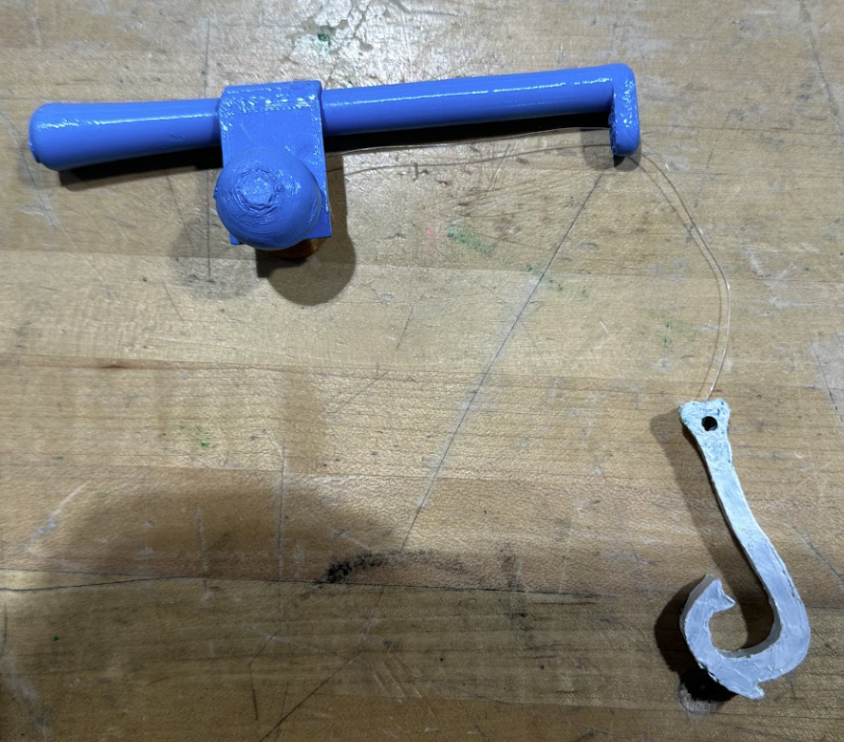
Fishing rod with Maui’s hook
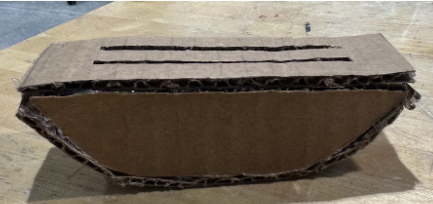
Idea #1: “Balancing Boat”
Conclusion
Outcome
Inspired by the recent premiere of Disney’s Moana 2, our team chose to create the Moana’s Mission toy set. The customer receives a fishing rod, island base, and one of three toy/character pairs, giving them the tools to build their own island, just as the character Maui does in the movie!
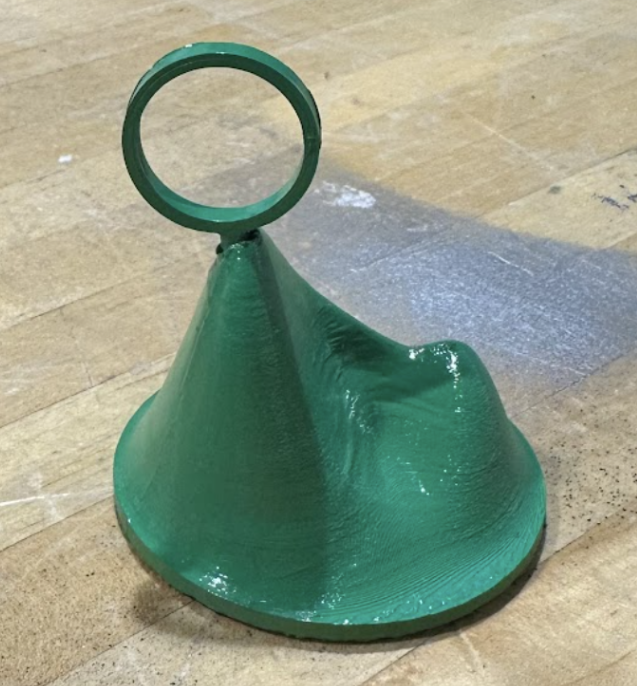
Island base (Picked up using the fishing rod)
Ideation Process
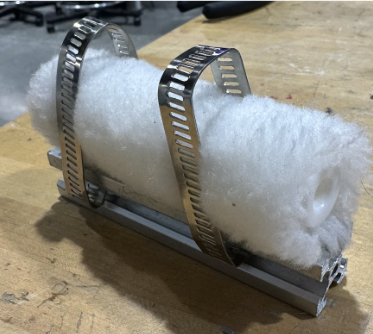
Idea #2: Train Maze
Solution Selection
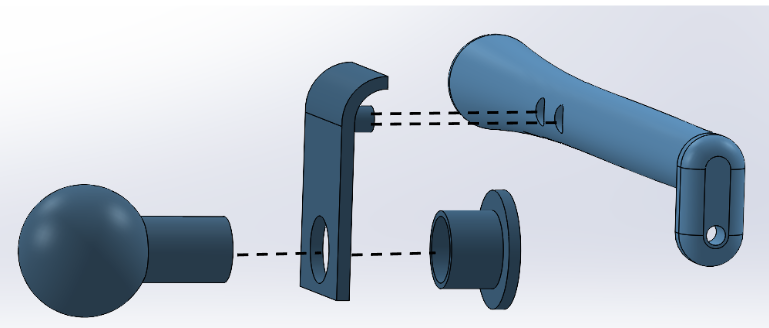
CAD & DFM
I found this project both engaging and rewarding, and it further solidified my interest in product design. I’ve always loved CAD, so of course, I enjoyed continuing to refine my SolidWorks skills. However, beyond that, I found the broader challenge to designing an injection-moldable children’s toy especially interesting. Balancing manufacturability, safety, sustainability, and marketability pushed me to think beyond making a good-looking CAD design and consider the full product lifestyle. Overall, this experience strengthened my appreciation for designing with real-world applications in mind and developing practical, market-ready products.
Skills
CAD Modeling (SolidWorks)
Design for Manufacturability (DFM)
Design for Assembly (DFA)
Rapid Prototyping
Engineering Drawings
In addition to the project’s given criteria, our group determined that our toy must also be sustainable, benefit children’s mental and physical development, and be themed around a popular children’s movie or TV show. To begin the brainstorming process, all three of us came up with multiple ideas that satisfied the design criteria. We used Pugh Scoring Matrices to narrow down to three ideas and created rapid prototypes of the three toys, shown below.
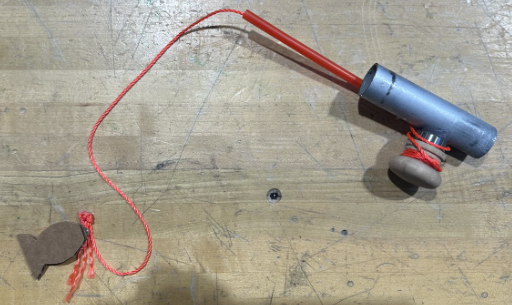
Idea #3: Fishing Rod
We then shared our three ideas with classmates, TAs, and professors for feedback and decided to move forward with the fishing rod as our toy. One of our professors really pushed us to continue developing upon this idea and figure out how to make it as engaging as possible for kids (i.e. something they wouldn’t get bored of after 10 minutes and never play with again). However, this was something we really struggled with. It was difficult to find an idea that fulfilled our long list of criteria, and we spent a fair amount of time stuck in the cycle of coming up with and subsequently rejecting ideas before we arrived at our final solution.
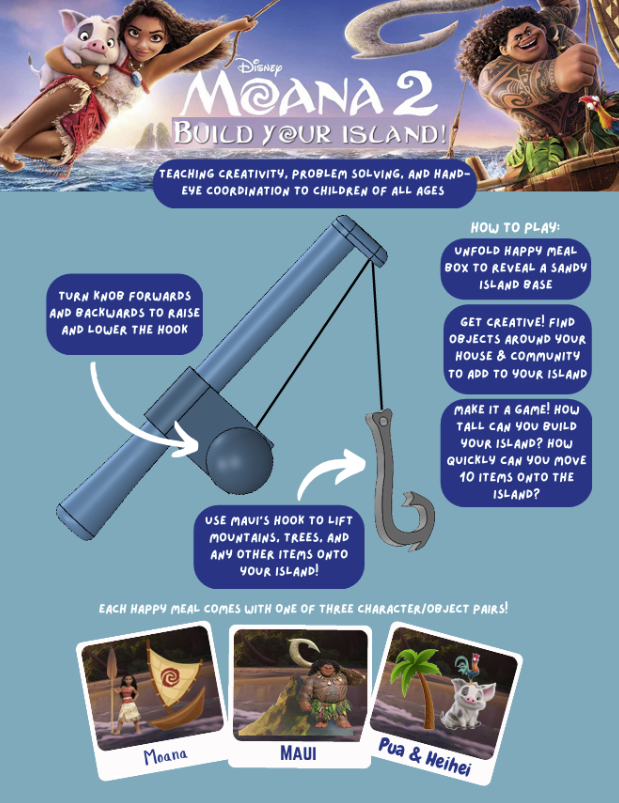
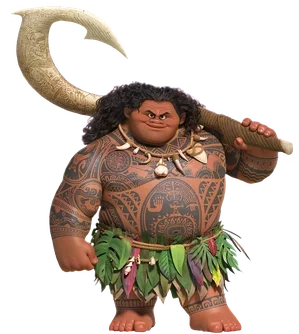
Ultimately, we decided to make Moana’s Mission, inspired by the character Maui from Moana 2. In the movie, Maui uses his hook to pull an island from the depths of the ocean, and our toy allows the user to do just that! The toy set comes with two separate toys: a fishing rod and a mountain. Off of the end of the fishing rod dangles Maui’s hook, which is connected to the rod by a fishing wire and can be reeled in and out using a knob. This allows the user to “build” their own island by picking up the mountain and other objects with Maui’s hook.
How Moana’s Mission satisfies our design criteria:
Child Development: Turning the knob improves fine motor skills, and maneuvering the hook through the clip on the mountain improves depth perception and hand-eye coordination. Children are also encouraged to create their own games with the set and incorporate outside objects into this play, teaching creativity and resourcefulness.
Safety: Very tight tolerancing was used in the design process, so all small pieces that could be choking hazards are firmly attached and impossible to separate.
Sustainability: The entire toy, except for the fishing wire, is made of recyclable plastic. Both the rod and collectable toy can be played with independently, and the children are encouraged to make use of the box and other objects in their environment.
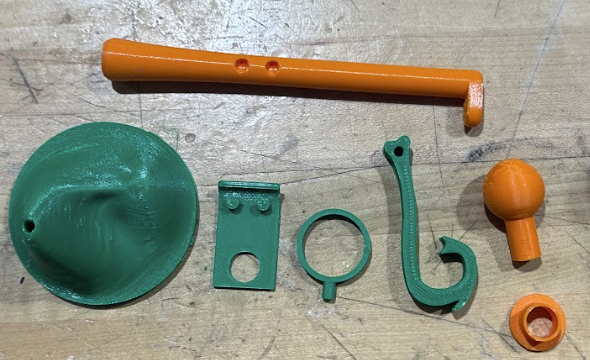
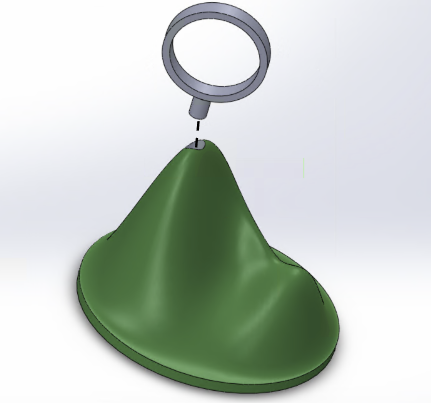
Moana’s Mission is composed of 2 separate assemblies: a 5-piece assembly for the fishing rod and a 2-piece assembly for the mountain. Both assemblies were broken into multiple pieces to allow for efficient manufacturing, and the shape of each piece was carefully selected to ensure that all pieces are injection moldable. I personally designed the body of the fishing rod and Maui’s hook, which taught me valuable information not only about design-for-manufacturability principles but also working with organic shapes in SolidWorks.
During the design process, we identified 4 critical-to-fit (CTF) dimensions:
Knob & Spool: Tight Fit (both become choking hazards if separated)
Mountain & Ring: Tight Fit (ring is used to lift mountain)
Clip & Rod: Tight fit (functionality lost if clip becomes disconnected from rod)
Knob & Clip: Loose fit (knob must be able to fully rotate to raise/lower hook)
Originally, we decided that the ideal tolerancing would be 0.125mm for a tight fit and 0.2mm for a loose fit. However, our first round of 3D prints quickly showed that our ideal dimensions had to be re-evaluated. We ultimately had to do multiple tests prints to determine the optimal tolerancing for each of our 4 CTF dimensions.
To ensure our design met the cost-effectiveness criteria, we used a plastic part cost estimation tool to evaluate the molding, material, and labor-related costs associated with the seven injection-molded components of the toy. From this tool, we deduced that the entire Moana’s Mission toy set would cost just $0.20 to produce, with each individual component costing between $0.01 and $0.05. Comparing this to a similar product, the McDonald’s Happy Meal toy, we concluded that Moana’s Mission is decidedly cost-efficient, as Happy Meal toys are generally capped at around $0.25-$0.35.
Marketing poster for Moana’s Mission